Looking Back: UBN Roadshow 2026
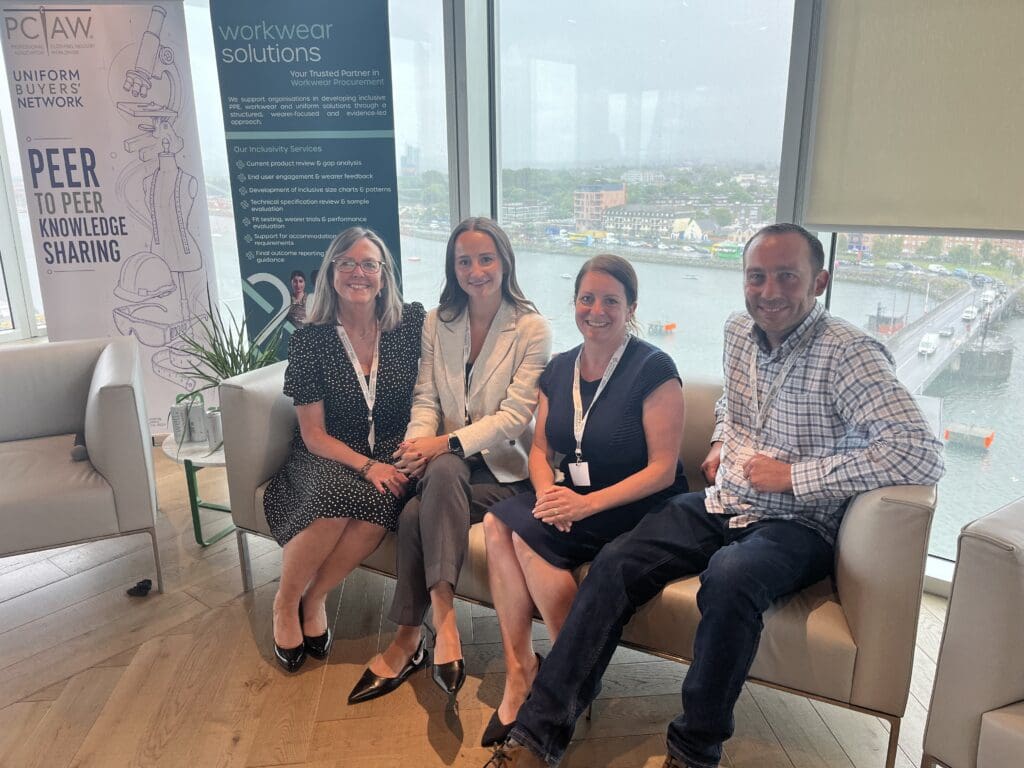
Workwear Solutions are proud to have co-hosted this year’s Uniform Buyers Network Road Show with our client An Post at the iconic Exo Building in Dublin. The event brought together procurement professionals, uniform buyers & industry thought leaders from across the sector, providing a forum to share real-world experiences, discuss practical challenges and exchange proven solutions.
This year’s event centred on how organisations can build more resilient, sustainable and evidence-based uniform, workwear and PPE programmes. Across keynote presentations, panel discussions and collaborative, open conversations, our team left the event focused on three key priorities for future-proofing uniform, workwear & PPE programmes.
Designing for Circularity – Prioritising Durability
Durability is a key pillar of circularity and sustainability, but defining what constitutes a “durable” product is far from straightforward. Uniforms, workwear and PPE face vastly different working environments, laundering regimes and user behaviours, meaning durability can mean something different across every product and wearer. While durability is fundamental to performance and product longevity, wearer comfort must remain equally important. The challenge is therefore not simply how durable can we make a garment, but how do we meaningfully measure what “good” looks like?
Ideas around measuring durability with circularity in mind include:
- Moving beyond the garment. Considerations for durability need to extend to the full lifecycle of uniforms – gathering information on how and why products fail during expected use, or how they can be managed (or preferably, extended) at end of life, can provide useful insights to improve the durability of future uniforms. This could mean specifying performance levels at component level and evaluating the durability of zips, fastenings and trims individually, helping to identify and address specific points of failure.
- Designing for repair, not replacement. Practical, cost-effective repair processes can make extending a garment’s life a more attractive option than replacing it after a single point of failure. Designing garments with repair in mind, alongside clear user guidance and company policies that support repair, can help embed repairability into everyday uniform programmes, creating longer-lasting products that align with the direction of Eco-design for Sustainable Products Regulation.
- Making reuse more desirable. Extending the life of uniforms also means addressing the perception of pre-worn garments. This is particularly relevant for temporary staff uniforms, where garments may have significant useful life remaining, and can be an extremely cost efficient way of managing the total costs of a uniform programme. These initiatives may need to include considerations such as hygienic laundering, and repair or alterations services, to ‘recondition’ the items to an acceptable level. The question is: how can we design, manage and communicate uniform reuse so that pre-worn becomes an appealing and accepted choice rather than a compromise?
Durability doesn’t have to lie solely in the performance of the physical garment and its’ component parts – there is an emotional side to durability too. Buyers continue to face the challenge of balancing cost pressures with the need to deliver a positive employee experience, while meeting increasingly ambitious sustainability objectives. Improving the overall uniform experience can influence how garments are valued, worn and cared for – ultimately helping to extend their useful life. When people feel comfortable, confident and positive about what they wear, they may be more likely to value and care for it, making emotional durability an often-overlooked but important consideration in uniform provision.
User-Centred Design – Inclusivity & Fabric Selection
The new British Standard BS 30417 addresses the urgent need for inclusive PPE provision, and it can help buyers embed better fit, comfort and protection when they outline requirements designed to meet the needs of their diverse workforces.
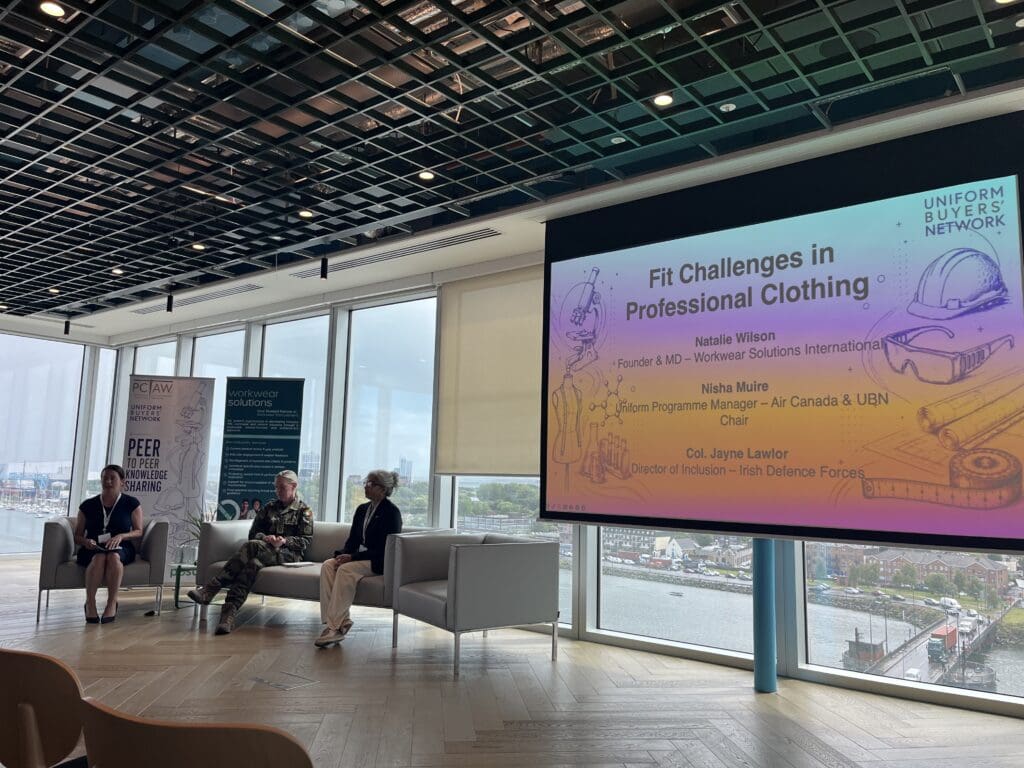
Poor fit is a systemic challenge embedded throughout the design, specification and procurement process, often driven by outdated sizing data, limited fit models and assumptions about workforce demographics. Many workwear and PPE programmes fail to reflect the diversity of today’s employees, with 38% using workarounds to make PPE fit, 50% experiencing improper fit and 58% using the wrong size at least some of the time (Women’s Experience with PPE in the Workplace – Canada, 2022). Usingcurrent, relevant anthropometric data that reflects the diversity of the workforceenables a more user-centred approach to design and product development, placing the end user at the heart of decision-making.
The impact of poor fit extends beyond comfort – it affects performance and safety: 57% of women said their PPE sometimes or significantly hampered their work, while 40% reported injuries or incidents linked to PPE, and only 29% used PPE specifically designed for women (Trade Union’s Congress (TUC) PPE and Women Report – UK, 2024). Providing female wearers with the same choice, functionality and accessibility as their male counterparts is essential, without requiring them to source their own equipment. Buyers should consider the practical challenges faced by women in male-dominated environments and ensure purchasing decisions are informed by wearer feedback.
However, functionality requirements remain highly diverse, creating challenges when adapting uniforms across broad size ranges. Traditional grading methods, particularly for womenswear, often fail to accommodate the variety of body shapes within a workforce, highlighting the need for more inclusive sizing ranges and consistent sizing indicators. By considering the diverse needs of user demographics from the outset, organisations can help ensure PPE (alongside workwear and uniform) is more effective, comfortable and accessible for their workforce. Consideration may include understanding permanent factors such as gender, religion and culture; acknowledging longer-term changes such as ageing and disability; and improving awareness of shorter-term needs including pregnancy and illness, as well as other factors such as neurodiversity and skin sensitivity.
While greater consistency in sizing could help improve fit across the industry, a universal sizing system is difficult to achieve due to demographic differences across global populations. Instead, the focus should be on updating outdated anthropometric data and improving how body measurements are collected and applied, enabling PPE and workwear to better reflect the diversity of today’s workforce and move beyond traditional “one-size-fits-all” approaches. This, alongside more inclusive sizing ranges and consistent sizing indicators, can support more effective, comfortable and accessible products across diverse user demographics.
There are also additional challenges for the development of inclusive PPE which cannot simply be addressed through design and fit considerations – with test methods, certification process requirements and Standards all requiring greater consideration of the diversity of today’s workforce. Correctly fitting PPE can be the difference between injury, long term health issues or a healthy, happy workforce.
User-centred design and inclusivity extends beyond the finished product – selecting and specifying fabrics that respond to the needs of the workforce is equally important. Fibre-level innovations in thermoregulation, durability, recyclability and adaptive fit can help buyers address changing environmental conditions, support wearer wellbeing and overcome technical challenges.
Innovations in fabric technology are increasingly focused on improving comfort, confidence and garment performance, from fibres that reduce the visibility of sweat marks and help fabrics stay fresher for longer, to lightweight insulation that adapts to changing temperatures and compression fibres that support comfort and freedom of movement. Other developments include UV-protective fibres with UPF 50+ ratings, stretch fibres designed to retain their shape and performance through repeated industrial laundering, and adaptive technologies that accommodate a wider range of body shapes and natural changes. (LYCRA Company).
Navigating Upcoming Regulation – DPP Compliance
As Digital Product Passport (DPP) legislation approaches, transparency and traceability are becoming a “need to have”, rather than a “nice to have”. While the exact requirements for textiles are still under development, buyers can begin preparing by focusing on three key areas:
- Responsibility. Buyers need clarity on where responsibility for DPP data sits across the supply chain. Managed suppliers should be able to provide the information required for products supplied to the end user, but buyers will need processes in place to ensure this information is captured, verified and available before products enter circulation. Early engagement with suppliers can help establish who is responsible for collecting, managing and ultimately creating the DPP.
- Evidence and information capture. Effective traceability depends on having reliable, accessible evidence throughout the product lifecycle. Buyers and suppliers will need to consider how information is collected, securely stored and made accessible, while protecting commercially sensitive supply-chain information. The physical durability of the data carrier also needs consideration – particularly where labels can be removed or technologies have a limited number of wash cycles – ensuring that traceability does not become disconnected from the garment it is intended to follow.
- Technology utilisation. Technology will play an increasingly important role in making product information accessible while controlling who can view it. QR codes are likely to provide a practical foundation for DPPs, with RFID, NFC and other technologies offering additional functionality where appropriate. Permission-based access can help protect commercially sensitive information, while emerging applications could extend beyond compliance – for example, enabling a wearer to scan PPE to verify that it meets the required standard for their role or use.
The immediate priority for buyers is to start engaging with suppliers now. Understanding what information suppliers already capture, where gaps exist and what technologies are currently being used provides a practical starting point for building DPP readiness – while creating opportunities to use product data not only for compliance, but to improve transparency, safety and connection with the workforce.
Together, the events’ themes point towards three practical solutions for future-proofing uniform, workwear and PPE programmes: a broader approach to durability that considers both physical performance and wearer experience, more user-centred and inclusive design, and greater transparency through Digital Product Passports. Collectively, they offer a more purposeful approach to delivering long-term value for both people and organisations.
Our team extends their thanks to the PCIAW®, Uniform Buyers Network and co-host organisation, An Post for an incredibly informative event.